FIFA World Cup 2026 Complete Schedule: Every Match, Every Group, Every Kick-Off Time
Published: June 6, 2026 · 9 min read
The FIFA World Cup 2026 rewrites the record books before a single ball is kicked. 48 teams. 104 matches. 16 host cities spanning three nations and four time zones. This is the most expansive tournament FIFA has ever staged, and keeping track of every fixture requires a level of organization that most fans underestimate until they realize their favorite team's decisive group match kicks off at 3 AM local time. This guide breaks down the entire tournament structure so you know exactly when to tune in — and how to make sure you never miss a moment.
Tournament Structure: The New 48-Team Format
Unlike previous World Cups with 32 teams split into eight groups of four, the 2026 edition features 12 groups of four teams each. The top two from each group advance, along with the eight best third-placed teams, creating a Round of 32 — an entirely new knockout stage. This expanded format means more matches, more drama, and more opportunities for underdog stories to unfold.
The knock-on effect for viewers is significant: on peak group stage days, up to four matches run simultaneously. If you are following multiple teams — or simply love football — you need a viewing setup capable of handling concurrent streams. This is where a multi-device IPTV service becomes indispensable rather than optional.
Phase 1: Group Stage — June 11 to June 27
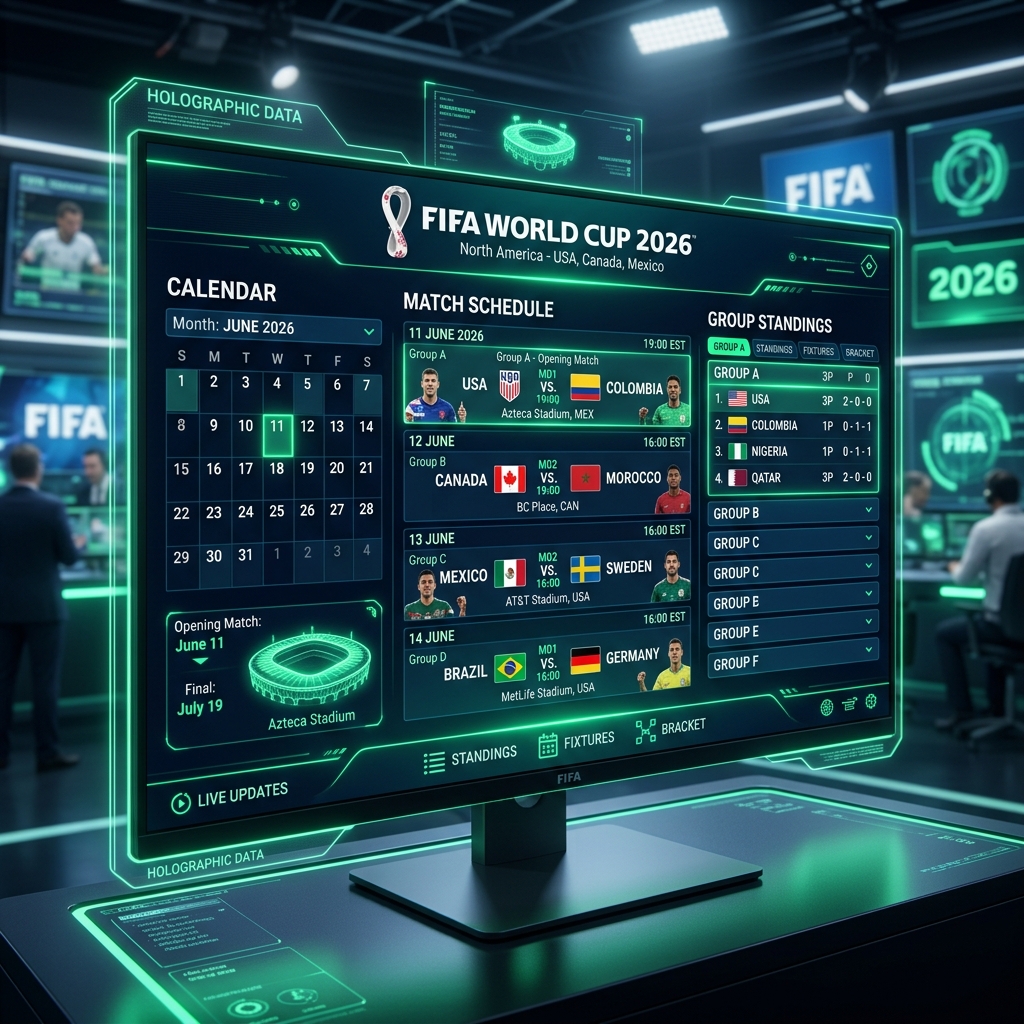
The opening match takes place on June 11, 2026, at Estadio Azteca in Mexico City — a venue soaked in World Cup history. From that first whistle, the group stage runs for 17 days with an average of four to six matches per day. That translates to roughly 96 hours of live football in just over two weeks.
Key scheduling details to plan around:
- Early kick-offs — Matches in eastern US cities (New York, Philadelphia, Boston) typically start at 1:00 PM, 4:00 PM, and 7:00 PM ET.
- Western US venues — Games in Los Angeles, San Francisco, and Seattle shift kick-off times to PT, meaning 10:00 AM starts for east coast viewers.
- Mexican venues — Mexico City, Guadalajara, and Monterrey operate on CT/MT, creating a middle-ground time slot.
- Canadian venues — Toronto and Vancouver add further time zone variation.
The final round of group matches follows the traditional FIFA format: all games in the same group kick off simultaneously to prevent collusion. This creates the most exciting — and most scheduling-intensive — days of the group phase. With 12 groups to resolve, June 25–27 will feature a relentless wave of decisive matches, often four at a time across multiple time zones.
Phase 2: Round of 32 — June 28 to July 3
The brand-new Round of 32 is the first knockout stage, eliminating 16 teams over six days. Expect four matches per day with staggered kick-offs. This stage will feature some lopsided matchups as group winners face third-placed qualifiers, but it also introduces the pressure of single-elimination football — where one mistake ends your tournament.
Phase 3: Round of 16 — July 4 to July 7
Sixteen teams remain, and the intensity ratchets up. Eight matches over four days, with two per day. By this point, every match is a blockbuster. Historically, the Round of 16 produces some of the World Cup's most iconic moments — think Maradona's "Hand of God" in 1986 or James Rodríguez's volley against Uruguay in 2014.
Phase 4: Quarter-Finals — July 9 to July 11
Four matches, three days. The quarter-finals typically deliver the highest concentration of drama in any World Cup. The eight surviving teams represent the tournament's genuine contenders, and every match is a tactical chess match between elite coaches with everything on the line.
Phase 5: Semi-Finals — July 14 and July 15
Two matches that determine who plays for the ultimate prize. Semi-finals are historically tight, tense affairs — penalty shootouts are common, extra time is almost expected, and the emotional stakes are unmatched. Both matches will command massive global audiences.
The Final: July 19, 2026
MetLife Stadium in East Rutherford, New Jersey hosts the grandest stage in football. The final is expected to draw over 1.5 billion viewers worldwide, making it the most-watched single sporting event of the year. Kick-off is projected for 4:00 PM ET — prime time in Europe, late evening in Africa and the Middle East, and early morning in East Asia.
The 16 Host Cities at a Glance
Matches are distributed across three countries:
- United States (11 cities) — New York/New Jersey, Los Angeles, Dallas, San Francisco, Miami, Houston, Seattle, Philadelphia, Kansas City, Atlanta, Boston
- Mexico (3 cities) — Mexico City, Guadalajara, Monterrey
- Canada (2 cities) — Toronto, Vancouver
The geographic spread means kick-off times vary by up to three hours depending on the venue. For fans outside North America, this creates a wide viewing window — European viewers will catch most matches in evening prime time, while Asian and Australian fans will need to plan for morning sessions.
How to Never Miss a Single Match
With four to six matches per day during the group stage and games scattered across time zones, the only reliable strategy is a streaming service that offers all broadcaster feeds, multi-device support, and catch-up replay functionality. EliteVision covers every angle: live channels from every major football broadcaster, simultaneous streaming on multiple devices so you can watch parallel matches, and 24/7 availability so time zones become irrelevant. Whether the game kicks off at noon or midnight in your location, the stream is there, stable, and in full 4K resolution.
Set up your EliteVision account before the tournament begins on June 11, pin your team's group matches, and enjoy the most comprehensive World Cup viewing experience available anywhere.
Frequently Asked Questions
How many matches are in the World Cup 2026?
The 2026 World Cup features 104 matches in total — 96 in the group stage and knockout rounds, plus the third-place play-off and the final. This is a significant increase from the 64 matches in the previous 32-team format.
When does the World Cup 2026 start and end?
The tournament opens on June 11, 2026, with the first group stage match. The final takes place on July 19, 2026, at MetLife Stadium in New Jersey, spanning 39 days of continuous football action.
What time zone are the matches in?
Matches are spread across four North American time zones: Eastern (ET), Central (CT), Mountain (MT), and Pacific (PT). Kick-off times typically range from 1:00 PM to 10:00 PM ET, which translates to evening and night viewing in Europe and Africa.
Can I watch matches that overlap at the same time?
With EliteVision, absolutely. Multi-device support allows you to stream different matches simultaneously on your TV, phone, tablet, or laptop — essential during the final round of group matches when all games in a group kick off at the same time.