
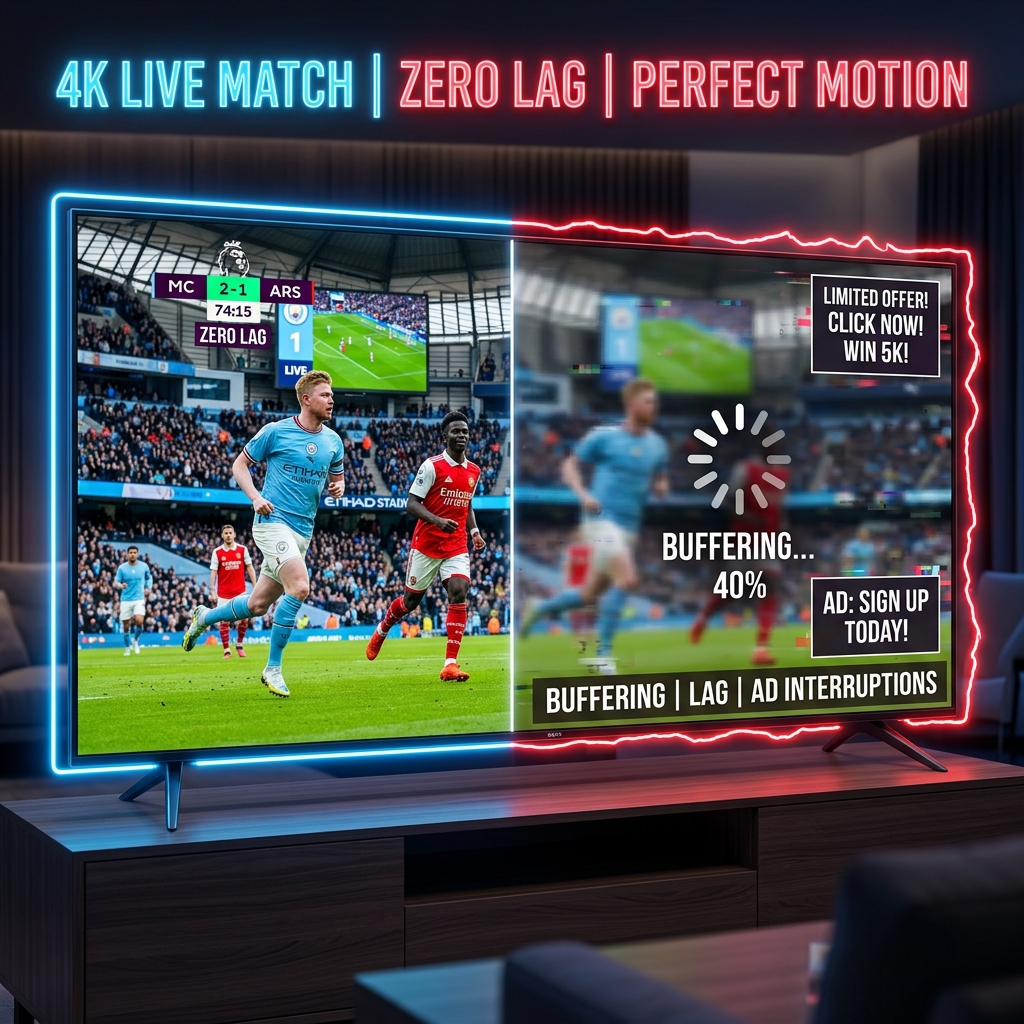
IPTV vs Cable TV in 2026: Why Cord-Cutters Are Winning
Published: June 6, 2026 · 8 min read
Cable television had a remarkable run. For decades, it was the only way to access live news, sports, and entertainment from the comfort of your living room. But in 2026, the numbers tell an undeniable story: over 55 million households in the United States alone have cancelled their cable subscriptions since 2015, and the pace is accelerating. The reason is not complicated — IPTV delivers more content, better quality, greater flexibility, and dramatically lower costs. Here is a head-to-head breakdown of exactly where cable falls short and why internet-based streaming has become the obvious choice.
Cost: The Most Obvious Win for IPTV
The average cable TV bill in the United States now exceeds $130 per month when you factor in equipment rental fees, regional sports surcharges, broadcast fees, and the inevitable price hikes that arrive every twelve months. That adds up to over $1,500 per year — for a service that forces you to pay for hundreds of channels you have never watched and never will.
IPTV subscriptions operate on an entirely different pricing model. A premium provider like EliteVision offers access to over 18,000 live channels and a massive on-demand library at a fraction of that cost, with no hidden fees, no equipment rentals, and no long-term contracts. The savings over a single year can easily reach $1,000 or more — money that stays in your pocket instead of funding a cable company's bloated infrastructure.
Channel Selection: Thousands vs Hundreds
A typical cable package includes somewhere between 150 and 300 channels, depending on your tier. Want premium channels? That is an add-on. International channels? Another add-on. Sports packages? Yet another surcharge. The nickel-and-dime structure means the channels you actually want end up costing significantly more than the base price suggests.
IPTV services aggregate content from broadcasters worldwide. EliteVision's catalog spans channels from North America, Europe, Asia, Africa, Latin America, and the Middle East — all included in a single subscription. Whether you want to watch the Premier League on a UK feed, a Bollywood movie on an Indian channel, or the latest drama series on a US network, everything is accessible from one interface without any add-on fees.
Picture Quality: 4K vs Compressed 1080i
Cable providers still broadcast most channels in 1080i — an interlaced format that was state-of-the-art in 2005. On a modern 4K television, 1080i content looks noticeably soft, especially during fast motion like sports. The cable signal is also heavily compressed to fit within the bandwidth limitations of coaxial infrastructure, which introduces artifacts, banding in gradients, and loss of fine detail.
Premium IPTV providers have leapfrogged cable entirely. EliteVision delivers channels in native 4K and even 8K resolution with HDR color grading. The difference is immediately visible — colors are richer, motion is smoother, and fine details like individual blades of grass on a football pitch or the texture of an actor's costume remain crisp and clear. Once you have watched content in true 4K through an IPTV service, going back to cable feels like putting on an old pair of glasses with the wrong prescription.
Flexibility: Watch Anywhere vs Stuck at Home
Cable TV is fundamentally tethered to your home. The signal comes through a coaxial cable in the wall, feeds into a rented set-top box, and connects to one television. Want to watch in another room? Rent another box. Want to watch on your phone during a commute? Not possible. Want to watch while traveling abroad? Absolutely not.
IPTV works on any internet-connected device. Smart TVs, Fire Sticks, Apple TV, Android boxes, smartphones, tablets, laptops — your content follows you everywhere. EliteVision supports multi-device connections on a single account, so you can watch a football match on the living room TV while your partner streams a movie on a tablet in the bedroom and your kids watch cartoons on an iPad. Try doing that with a cable box.
Contracts and Commitments: Freedom vs Lock-In
Cable companies thrive on lock-in. Most require 12 to 24-month contracts with punishing early termination fees that can reach $200 or more. The promotional rate that seemed attractive when you signed up inevitably spikes after the first year, but by then you are trapped.
IPTV subscriptions are typically month-to-month with no binding contracts. Cancel anytime without penalties. Downgrade, upgrade, or pause your service as your needs change. EliteVision offers flexible plans ranging from monthly to annual, and every plan includes the full channel lineup — no bait-and-switch pricing tiers designed to upsell you later.
On-Demand Content: Built-In vs Extra Cost
Cable's on-demand offerings are notoriously limited. Most providers offer a small selection of recent episodes and pay-per-view movies, often at additional cost. The interface is clunky, search is slow, and the content library refreshes at a glacial pace.
IPTV services integrate on-demand content directly into the experience. EliteVision includes a vast VOD library spanning movies, series, documentaries, and kids content — all accessible from the same app you use for live TV. No switching between apps, no additional subscriptions, no per-title charges. Search for any title, press play, and start watching in 4K.
DVR and Catch-Up: Record Everything Without Hardware
Recording shows on cable requires a DVR box — yet another piece of rented hardware that typically holds a limited number of hours and charges you monthly for the privilege. Miss a program and forget to set the DVR? Gone.
Many IPTV providers offer catch-up TV that automatically records and stores recent broadcasts for up to 72 hours. EliteVision's catch-up feature lets you rewind live TV on supported channels without any additional hardware or fees. It is like having a cloud DVR with unlimited storage that is always on.
The Verdict: Cable Is a Relic
The comparison is not close. IPTV wins on price, content volume, picture quality, device flexibility, contract terms, on-demand access, and recording capabilities. Cable television was built for an era when the coaxial cable in your wall was the only pipeline to entertainment. In 2026, that pipeline is the internet — faster, cheaper, and infinitely more versatile.
EliteVision represents the best of what modern IPTV can deliver: 18,000+ channels in 4K/8K quality, global content coverage, multi-device support, no contracts, and a server infrastructure built for 99.9% uptime. If you are still paying a cable bill, the question is not whether to switch — it is why you have not switched already.
Frequently Asked Questions
Is IPTV really cheaper than cable in 2026?
Yes, significantly. The average cable bill exceeds $130/month with fees and surcharges. A premium IPTV service like EliteVision provides more channels and better quality at a fraction of that cost, with no equipment rental fees or hidden surcharges.
Can I get live sports with IPTV instead of cable?
Absolutely. EliteVision carries sports channels from around the world including feeds for the Premier League, NFL, NBA, Champions League, UFC, and major tournaments like the World Cup. You often get more sports coverage with IPTV than with any cable sports package.
Do I need special equipment to switch from cable to IPTV?
No. If you already own a smart TV, Amazon Fire Stick, Apple TV, or any Android device, you have everything you need. There is no set-top box to rent, no installation appointment to schedule, and no technician visit required.
What internet speed do I need to replace cable with IPTV?
A minimum of 15 Mbps handles standard HD streaming comfortably. For 4K quality, 25 Mbps is recommended for a single stream. If multiple people in your household will stream simultaneously, 50 Mbps or faster ensures everyone watches without buffering.